People

NETS Lab brings together researchers working across machine learning theory, computer vision, autonomy, scientific modeling, and deployment. The group spans faculty, PhD researchers, engineering contributors, and student collaborators working on shared problems.


Current Team

Faculty Lead

Ryan T. White

Faculty Lead

Ryan T. White, PhD

Director of the NETS Lab

Associate Professor in Applied Mathematics working across machine learning, computer vision, autonomy, probability, and scientific applications.
Graduate Researchers

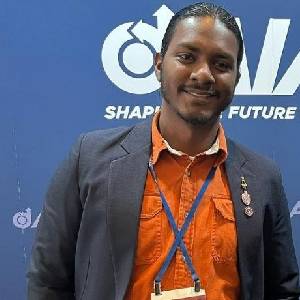
Nehru Attzs

Graduate Researcher

Nehru Attzs

PhD Candidate

Works on efficient spacecraft perception, tracking-by-detection, and edge-capable algorithms for orbital vision systems.

Marcello Mattei

Graduate Researcher

Marcello Mattei

PhD Candidate

Works on estimating blood flow fields in vasculature and the heart using physics-enforcing neural networks and scientific machine learning.
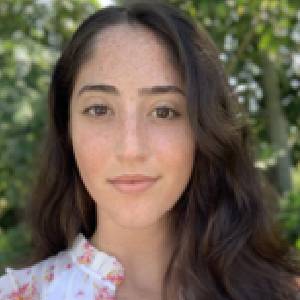
Arianna Issitt

Graduate Researcher

Arianna Issitt

PhD Researcher

Works on space-domain computer vision, 3D reconstruction, digital twins, and explainable AI for perception systems.
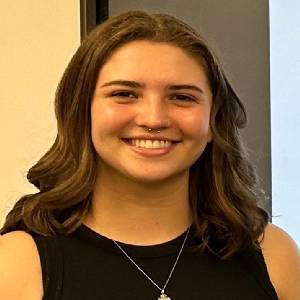
Emily Happy

Graduate Researcher

Emily Happy

PhD Researcher

Works on forecasting flight conditions in aviation meteorology, with experience spanning scientific vision and space-domain applications.

Steven Holmberg

Graduate Researcher

Steven Holmberg

Graduate Researcher

Works in aerospace guidance and space perception, and leads eye-tracking efforts for human-inspired computer vision.

Lamine Deen

Graduate Researcher

Lamine Deen

Graduate Researcher

Works primarily in explainable AI and related machine learning projects across the lab.

Lennon Shikhman

Graduate Researcher

Lennon Shikhman

Graduate Researcher

Works on prompt engineering for space autonomy and helps coordinate the lab's QAI collaborations with the quantum biology team.
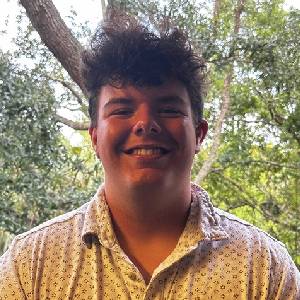
Undergraduate Researchers

Blake Gisclair

Student Contributor

Blake Gisclair

Undergraduate Researcher

Leads the lab's QAI team, with work spanning HSI microscopy, computer vision, signal processing, space sensing, and mathematically oriented ML.

Nicholas Welsh

Student Contributor

Nicholas Welsh

Undergraduate Researcher

Works on the QAI team, language models, and eye-tracking for human-inspired computer vision.

Sloan Hatter

Student Contributor

Sloan Hatter

Undergraduate Researcher

Works on AI hardware deployment and shrinking vision models for space-constrained systems.

Avy Wade

Student Contributor

Avy Wade

Undergraduate Researcher

Works on the QAI team as part of the lab's ongoing cross-department research effort.

Elijah Clark

Student Contributor

Elijah Clark

Undergraduate Researcher

Works on spacecraft rotation estimation and related perception problems for autonomy.

Jerry Collins

Student Contributor

Jerry Collins

Undergraduate Researcher

Contributes to NETS research projects as an undergraduate collaborator.

Matas Vaitkevicius

Student Contributor

Matas Vaitkevicius

Undergraduate Researcher

Works in explainable AI, including topological data analysis for identifying strong patterns in learned representations.


Alumni

NETS projects often involve contributors across career stages, and alumni remain part of the lab's research story through publications, systems, and collaborations that continue to shape the group.
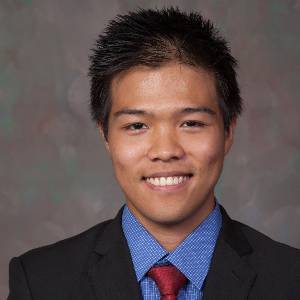
PhD Alumni

Minh Nguyen

Alumni

Minh Nguyen, PhD

AI Engineer III, UF-NVIDIA Technology Center

Contributed to NETS vision and machine learning research before moving into industry AI engineering.
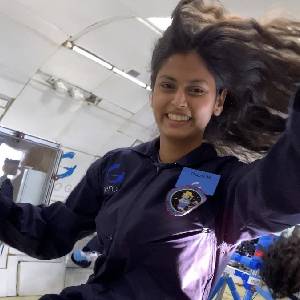
Trupti Mahendrakar

Alumni

Trupti Mahendrakar, PhD

Spacecraft Navigation Engineer, NASA Johnson Space Center

Led major work in spacecraft inspection, onboard detection, autonomous proximity operations, and low-resource deployment.
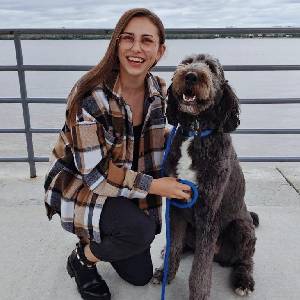
Mackenzie Meni

Alumni

Mackenzie Meni, PhD

Principal Research Engineer, RTX BBN Technologies

Advanced information-theoretic interpretability, bias detection, and entropy-guided learning across NETS projects.

MS Alumni

Abhishek Chothani

Alumni

Abhishek Chothani, MS

Robotics Applications Engineer, Trossen Robotics

Supported robotics, deployment, multi-view perception, and 3D object detection workflows across lab projects and now works as a Robotics Applications Engineer at Trossen Robotics.
Andrew Ekblad

Alumni

Andrew Ekblad, MS

FPGA Engineer, L3Harris

Worked on resource-constrained perception systems and hardware-aware implementations for space-domain vision.

Undergraduate Alumni

Emma Sandidge

Alumni

Emma Sandidge, BS

PhD Student, Florida International University

Contributed to satellite geometry and 3D Gaussian splatting work before continuing on to doctoral study.

Anthony Garcia Romano

Alumni

Anthony Garcia Romano, BS

NETS Alumni

Contributed to earlier NETS lab activities and student research efforts.
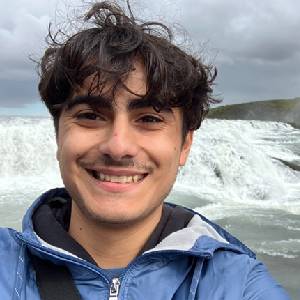
Alex Merino

Alumni

Alex Merino, BS

NETS Alumni

Graduated with a BS after contributing to sensing and applied ML projects in the lab.

Rahi Kashikar

Alumni

Rahi Kashikar, BS

NETS Alumni

NETS alum who contributed to undergraduate research efforts in the lab.

Kayla Taylor

Alumni

Kayla Taylor, BS

NETS Alumni

NETS alum who contributed to undergraduate research efforts in the lab.

High School Alumni

Mehek Niwas

Alumni

Mehek Niwas

BS Student, Rutgers University

Worked on explainable AI and entropy-flow questions in deep neural networks before continuing at Rutgers.

Nikhil Iyer

Alumni

Nikhil Iyer

BS Student, University of Florida

Worked on spacecraft pose estimation before continuing his studies at the University of Florida.


Collaborators and Lab Community

NETS work is collaborative by design. Students in the lab work alongside partners from government and defense labs, commercial organizations, and academic groups in areas including aerospace, biology, medicine, weather, and applied mathematics.

Ryan T. White

Faculty Lead

Ryan T. White, PhD

Director of the NETS Lab

Research spans deep learning, computer vision, edge computing, natural language processing, probability, stochastic analysis, and statistics, with projects in astronautics, aerospace engineering, biomedical engineering, genetics, biology, ecology, and glaciology.

He earned his PhD in Applied Mathematics from Florida Tech and leads NETS at the intersection of theory, perception, and deployment.

Nehru Attzs

Graduate Researcher

Nehru Attzs

PhD Candidate

Research focuses on efficient object tracking algorithms for edge hardware and other perception methods that support autonomous spacecraft operations.

Background in aerospace engineering, with work spanning tracking-by-detection and spacecraft component tracking.

Publications

  • 2026. Post-Launch Capability Expansion of Vision-Language Models via Prompting for On-Orbit Spacecraft Inspection. CVPR 2026 Workshop AI4Space.
  • 2023. A comparison of tracking-by-detection algorithms for real-time satellite component tracking. 37th Annual Small Satellite Conference.
  • 2023. Impact of Intra-class Variance on YOLOv5 Model Performance for Autonomous Navigation around Non-Cooperative Targets. AIAA Scitech 2023 Forum.
Arianna Issitt

Graduate Researcher

Arianna Issitt

PhD Researcher

Works on space-domain computer vision, onboard and edge-capable perception, 3D reconstruction, and explainable AI.

Her projects span digital twins, inspection-oriented orbital imaging, and scientific machine learning, with research experience connected to the Air Force Research Laboratory Space Vehicles Directorate.

Publications

  • 2026. Reliable Onboard 3D Reconstruction of Unknown Spacecraft via Data Acquisition Guided by Orbital Geometry and Lighting. AIAA SCITECH 2026 Forum.
  • 2026. Uncovering Neural Learning Dynamics Through Latent Mutual Information. Entropy.
  • 2026. Assessing the Predictive Value of Physics-Grounded Synthetic Data for Computer Vision in Space Environments. Submitted to CVPR 2026 Workshop SynData4CV.
  • 2025. On Optimal Observation Orbits for Learning Gaussian Splatting-Based 3D Models of Unknown Resident Space Objects. AIAA SCITECH 2025 Forum.
  • 2025. Predicting Cardiac Flow Patterns Using a Novel Hemodynamic Neural Network for LVAD Therapy Planning and Evaluation. The Journal of Heart and Lung Transplantation.
  • 2025. Inspection Orbit Selection for Gaussian Splatting-Based 3D Reconstruction of Unknown RSOs. Submitted to AIAA Journal of Spacecraft and Rockets.
  • 2023. 3D Reconstruction of Non-cooperative Resident Space Objects using Instant NGP-accelerated NeRF and D-NeRF. arXiv / AAS-AIAA Spaceflight Mechanics Conference.
  • Manuscript in progress. Closed-Loop Vision-Based Autonomous Docking for Unknown Spacecraft in a Physically Grounded Orbital Digital Twin.
Marcello Mattei

Graduate Researcher

Marcello Mattei

PhD Candidate

Works on estimating blood flow fields in vasculature and the heart using physics-enforcing neural networks and scientific machine learning.

Publications

  • 2025. Reconstruction of 3D vascular flow patterns from sparse angiographic data using a 3D convolutional neural network (CNN). Medical Imaging 2025: Clinical and Biomedical Imaging.
  • 2025. Predicting Cardiac Flow Patterns Using a Novel Hemodynamic Neural Network for LVAD Therapy Planning and Evaluation. The Journal of Heart and Lung Transplantation.
Emily Happy

Graduate Researcher

Emily Happy

PhD Researcher

Her main research area is forecasting flight conditions in aviation meteorology using machine learning.

She also brings experience across scientific vision and applied aerospace problems, including work that connects data, prediction, and operational decision support.

Publications

  • 2026. Assessing the Predictive Value of Physics-Grounded Synthetic Data for Computer Vision in Space Environments. Submitted to CVPR 2026 Workshop SynData4CV.
  • Manuscript in progress. Spatial Bias in Airport Assignment: Limitations of the Nearest-Airport Approach for General Aviation.
  • Abstract submitted to AIAA SCITECH Forum 2027. Masked Graph Neural Networks for Multi-Task Aviation Weather Prediction.
Abhishek Chothani

Alumni

Abhishek Chothani, MS

Robotics Applications Engineer, Trossen Robotics

Contributes to multi-view perception, 3D object detection, and robotics systems built with low-cost materials and practical deployment constraints in mind.

His master's thesis is archived through Florida Tech and reflects the lab's interest in systems that can move from concept to experiment quickly. He now works at Trossen Robotics as a Robotics Applications Engineer.

Lamine Deen

Graduate Researcher

Lamine Deen

Graduate Researcher

Lamine's work has leaned toward explainable AI and related machine learning questions in the lab.

His projects connect model behavior, interpretability, and collaborative research development across broader NETS efforts.

Publications

  • 2026. Uncovering Neural Learning Dynamics Through Latent Mutual Information. Entropy.
Steven Holmberg

Graduate Researcher

Steven Holmberg

Graduate Researcher

Steven works in aerospace autonomy and space perception, including guidance algorithms for spacecraft systems.

He also leads eye-tracking efforts for human-inspired computer vision in the lab.

Publications

  • 2023. Autonomous Rendezvous with Non-Cooperative Target Objects with Swarm Chasers and Observers. arXiv / AAS-AIAA Spaceflight Mechanics Conference.
  • Manuscript in progress. Autonomous Swarm Rendezvous with Unknown Non-Cooperative Spacecraft.
  • Manuscript in progress. Closed-Loop Vision-Based Autonomous Docking for Unknown Spacecraft in a Physically Grounded Orbital Digital Twin.
Lennon Shikhman

Graduate Researcher

Lennon Shikhman

Graduate Researcher

Lennon works on prompt engineering for space autonomy and related language-model directions in the lab.

He also helps coordinate the QAI team with the quantum biology side of the collaboration, alongside some direct research and coding contributions.

Publications

  • 2026. Post-Launch Capability Expansion of Vision-Language Models via Prompting for On-Orbit Spacecraft Inspection. CVPR 2026 Workshop AI4Space.
Blake Gisclair

Student Contributor

Blake Gisclair

Undergraduate Researcher

Blake leads the lab's QAI team for an ongoing NSF grant involving HSI microscopy and computer vision across departments.

His work spans signal processing, space sensing, and mathematically oriented ML, with planned PhD work in explainable AI and representation learning.

Publications

  • Submitted to NeurIPS. PEEK Variance: An Information-Theoretic Metric Unifying Interpretability, Optimization, and Efficiency in Deep Neural Networks.
Mehek Niwas

Alumni

Mehek Niwas

BS Student, Rutgers University

Mehek worked on explainable AI and entropy-flow questions in deep neural networks while in the lab.

Her projects connected model behavior, information flow, and interpretation within the lab's broader XAI and representation-learning efforts before continuing at Rutgers.

Nikhil Iyer

Alumni

Nikhil Iyer

BS Student, University of Florida

Nikhil worked on spacecraft pose estimation while in the lab.

His work contributed to the lab's broader space-perception effort before continuing his studies at the University of Florida.

Nicholas Welsh

Student Contributor

Nicholas Welsh

Undergraduate Researcher

Nicholas works on the QAI team, language models, and eye-tracking for human-inspired computer vision.

Publications

  • 2026. Post-Launch Capability Expansion of Vision-Language Models via Prompting for On-Orbit Spacecraft Inspection. CVPR 2026 Workshop AI4Space.
Avy Wade

Student Contributor

Avy Wade

Undergraduate Researcher

Avy works on the lab's QAI team as part of its ongoing collaborative research effort.

Elijah Clark

Student Contributor

Elijah Clark

Undergraduate Researcher

Elijah works on spacecraft rotation estimation and related perception problems for autonomy.

His projects contribute to the lab's broader effort in spacecraft state understanding and closed-loop autonomous operation.

Jerry Collins

Student Contributor

Jerry Collins

Undergraduate Researcher

Contributes to NETS research projects as an undergraduate collaborator.

Matas Vaitkevicius

Student Contributor

Matas Vaitkevicius

Undergraduate Researcher

Matas works in explainable AI, including topological data analysis for finding strong patterns in learned representations.

Sloan Hatter

Student Contributor

Sloan Hatter

Undergraduate Researcher

Sloan works on AI hardware deployment and shrinking vision models for space-constrained systems.

Trupti Mahendrakar

Alumni

Trupti Mahendrakar, PhD

Spacecraft Navigation Engineer, NASA Johnson Space Center

Research centered on on-orbit servicing, autonomous proximity operations, guidance and navigation, and onboard spacecraft feature detection.

Her background includes aerospace engineering work with NASA Jet Propulsion Laboratory, Collins Aerospace, Delta Air Lines, and now spacecraft navigation work at NASA Johnson Space Center.

Publications

  • 2026. Reliable Onboard 3D Reconstruction of Unknown Spacecraft via Data Acquisition Guided by Orbital Geometry and Lighting. AIAA SCITECH 2026 Forum.
  • 2025. On Optimal Observation Orbits for Learning Gaussian Splatting-Based 3D Models of Unknown Resident Space Objects. AIAA SCITECH 2025 Forum.
  • 2025. Probabilistic Explanations for Entropic Knowledge Extraction for Automated Satellite Component Detection. Journal of Aerospace Information Systems.
  • 2025. Inspection Orbit Selection for Gaussian Splatting-Based 3D Reconstruction of Unknown RSOs. Submitted to AIAA Journal of Spacecraft and Rockets.
  • 2024. Unknown non-cooperative spacecraft characterization with lightweight convolutional neural networks. Journal of Aerospace Information Systems.
  • 2024. Characterizing Satellite Geometry via Accelerated 3D Gaussian Splatting. Aerospace.
  • 2024. Satsplatyolo: 3D Gaussian Splatting-Based Virtual Object Detection Ensembles for Satellite Feature Recognition. arXiv preprint.
  • 2024. SpY: A context-based approach to spacecraft component detection. arXiv preprint.
  • 2024. Taking a PEEK into YOLOv5 for Satellite Component Recognition via Entropy-based Visual Explanations. AIAA SCITECH 2024 Forum.
  • 2023. A comparison of tracking-by-detection algorithms for real-time satellite component tracking. 37th Annual Small Satellite Conference.
  • 2023. SpaceYOLO: A Human-Inspired Model for Real-time, On-board Spacecraft Feature Detection. IEEE Aerospace Conference.
  • 2023. Resource-constrained FPGA Design for Satellite Component Feature Extraction. IEEE Aerospace Conference.
  • 2023. 3D Reconstruction of Non-cooperative Resident Space Objects using Instant NGP-accelerated NeRF and D-NeRF. arXiv / AAS-AIAA Spaceflight Mechanics Conference.
  • 2023. Autonomous Rendezvous with Non-Cooperative Target Objects with Swarm Chasers and Observers. arXiv / AAS-AIAA Spaceflight Mechanics Conference.
  • 2023. Impact of Intra-class Variance on YOLOv5 Model Performance for Autonomous Navigation around Non-Cooperative Targets. AIAA Scitech 2023 Forum.
  • 2022. Performance Study of YOLOv5 and Faster R-CNN for Autonomous Navigation around Non-Cooperative Targets. IEEE Aerospace Conference.
  • 2021. Use of artificial intelligence for feature recognition and flightpath planning around non-cooperative resident space objects. ASCEND 2021.
  • 2021. Real-time Satellite Component Recognition with YOLO-V5. Small Satellite Conference.
  • Manuscript in progress. Autonomous Swarm Rendezvous with Unknown Non-Cooperative Spacecraft.
  • Manuscript in progress. Closed-Loop Vision-Based Autonomous Docking for Unknown Spacecraft in a Physically Grounded Orbital Digital Twin.
Mackenzie Meni

Alumni

Mackenzie Meni, PhD

Principal Research Engineer, RTX BBN Technologies

Focused on information-theoretic analysis of neural models, explainable AI, and bias detection, with earlier experience in software development, Army Corps of Engineers ML research, and private-sector data science.

Her work helped shape the lab's direction in entropy-guided learning and interpretable neural decision-making.

Publications

  • 2026. Uncovering Neural Learning Dynamics Through Latent Mutual Information. Entropy.
  • 2025. Probabilistic Explanations for Entropic Knowledge Extraction for Automated Satellite Component Detection. Journal of Aerospace Information Systems.
  • 2025. PEEK-Guided Neural Network Pruning for Deployment on Low SWaP Hardware. Small Satellite Conference.
  • 2024. Entropy-based Guidance of Deep Neural Networks for Accelerated Convergence and Improved Performance. Information Sciences.
  • 2024. Taking a PEEK into YOLOv5 for Satellite Component Recognition via Entropy-based Visual Explanations. AIAA SCITECH 2024 Forum.
  • 2023. A comparison of tracking-by-detection algorithms for real-time satellite component tracking. 37th Annual Small Satellite Conference.
  • Submitted to NeurIPS. PEEK Variance: An Information-Theoretic Metric Unifying Interpretability, Optimization, and Efficiency in Deep Neural Networks.
Minh Nguyen

Alumni

Minh Nguyen, PhD

AI Engineer III, UF-NVIDIA Technology Center

NETS alum whose work contributed to the lab's space perception and machine learning program before moving into advanced AI engineering roles.

Publications

  • 2026. Post-Launch Capability Expansion of Vision-Language Models via Prompting for On-Orbit Spacecraft Inspection. CVPR 2026 Workshop AI4Space.
  • 2024. Characterizing Satellite Geometry via Accelerated 3D Gaussian Splatting. Aerospace.
  • 2024. Satsplatyolo: 3D Gaussian Splatting-Based Virtual Object Detection Ensembles for Satellite Feature Recognition. arXiv preprint.
  • 2023. 3D Reconstruction of Non-cooperative Resident Space Objects using Instant NGP-accelerated NeRF and D-NeRF. arXiv / AAS-AIAA Spaceflight Mechanics Conference.
  • 2023. promSEMBLE: Hard Pattern Mining and Ensemble Learning for Detecting DNA Promoter Sequences. IEEE/ACM Transactions on Computational Biology and Bioinformatics.
  • 2022. Determination of Mutation Rates with Two Symmetric and Asymmetric Mutation Types. Symmetry.
Andrew Ekblad

Alumni

Andrew Ekblad, MS

FPGA Engineer, L3Harris

Contributed to resource-constrained hardware implementations for spacecraft feature extraction and low-SWaP vision systems.

Publications

  • 2023. Resource-constrained FPGA Design for Satellite Component Feature Extraction. IEEE Aerospace Conference.
  • 2023. Autonomous Rendezvous with Non-Cooperative Target Objects with Swarm Chasers and Observers. arXiv / AAS-AIAA Spaceflight Mechanics Conference.
  • 2022. Performance Study of YOLOv5 and Faster R-CNN for Autonomous Navigation around Non-Cooperative Targets. IEEE Aerospace Conference.
  • 2021. Use of artificial intelligence for feature recognition and flightpath planning around non-cooperative resident space objects. ASCEND 2021.
Emma Sandidge

Alumni

Emma Sandidge, BS

PhD Student, Florida International University

Former NETS contributor whose work connected to satellite geometry and 3D Gaussian splatting-based component identification.

Publications

  • 2025. Applying 3D Gaussian Splatting-Based Object Detection Ensembles for Satellite Component Identification. Joint Mathematics Meetings 2025.
  • 2025. Satellite Feature Recognition with 3D Gaussian Splatting-Based Object Detection Ensembles. Joint Mathematics Meetings 2025.
  • 2025. Satellite Feature Identification Using 3D Gaussian Splatting-Based Object Detection Ensembles. Joint Mathematics Meetings 2025.
  • 2024. Characterizing Satellite Geometry via Accelerated 3D Gaussian Splatting. Aerospace.
  • 2024. Satsplatyolo: 3D Gaussian Splatting-Based Virtual Object Detection Ensembles for Satellite Feature Recognition. arXiv preprint.
Anthony Garcia Romano

Alumni

Anthony Garcia Romano, BS

NETS Alumni

Former student contributor to NETS lab projects.

Alex Merino

Alumni

Alex Merino, BS

BS

Graduated with a BS after contributing to sensing and applied machine learning projects within the NETS research program.

Publications

  • 2026. Uncovering Neural Learning Dynamics Through Latent Mutual Information. Entropy.
Rahi Kashikar

Alumni

Rahi Kashikar, BS

BS

NETS alum who contributed to undergraduate research efforts in the lab.

Kayla Taylor

Alumni

Kayla Taylor, BS

BS

NETS alum who contributed to undergraduate research efforts in the lab.